
In the language of jazz improvisation, there are certain devices that instantly add depth, tension, and sophistication to your lines. One of the most timeless and effective of these is the enclosure. Whether you’re studying the bebop masters or exploring modern post-bop phrasing, enclosures are a crucial part of the vocabulary that can transform simple scales into rich, melodic statements.
What Is an Enclosure?
At its core, an enclosure is a way of approaching a target note—usually a chord tone—by surrounding it from above and below before resolving. Think of it as a musical “embrace” of your destination note.
The most common form looks like this:
Upper neighbor → Lower neighbor → Target note
For example, if your target is the note G, you might play A (above) → F# (below) → G (target).
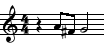
The result is a small, elegant melodic shape that creates forward momentum and interest while keeping the harmony in focus.
Historical Roots: From Bebop to Beyond
Enclosures are part of what makes bebop lines by Charlie Parker, Dizzy Gillespie, and Bud Powell sound so alive and rhythmically engaging. Parker, in particular, used them constantly to weave chord tones into fluid, chromatic phrases.
Later players like Joe Henderson, Michael Brecker, and Chris Potter expanded the concept, using more complex and extended enclosures to build longer, serpentine lines.
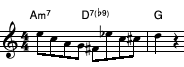
Here's a typical example of an enclosure used in Bebop:
Why Enclosures Work
Tension & Release – The “outside” notes (neighbors) create a moment of tension that resolves satisfyingly to the target.
Chromatic Flavor – They bring in half-step motion, one of the hallmarks of the jazz sound.
Voice Leading – Enclosures naturally guide the ear toward chord tones, making your improvisation harmonically grounded.
Flexibility – They work over virtually any harmonic context—major, minor, dominant, diminished, modal.
Variations on Enclosures
While the classic three-note form is common, there are endless possibilities:
Inverted Enclosure: Lower neighbor → Upper neighbor → Target.
Four-Note Enclosure: Upper neighbor → Lower neighbor → Lower chromatic → Target.
Delayed Resolution: Add extra chromatic approach notes before finally landing.
Each variation creates a different rhythmic and melodic contour, expanding your expressive toolkit.
Practice Ideas
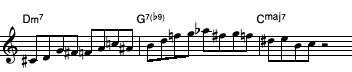
Apply to Chord Tones: Take a simple II–V–I in C major. Target chord tones (D–F–A–C for Dm7, G–B–D–F for G7, C–E–G–B for Cmaj7) and enclose each one.
Example:
Use in Scales: Practice enclosing every scale degree of a major scale ascending and descending.
Transcribe & Identify: Listen to Charlie Parker’s solos and circle the enclosures. You’ll start hearing them everywhere.
Improvise with Limits: Solo over a blues using only enclosures as your “entry point” to notes. This forces creativity.
Bringing It Into Your Playing
Enclosures are not just an “exercise”—they are a core melodic device in jazz language. Start by adding them sparingly into your lines, then gradually use them to shape entire phrases. Over time, they’ll become second nature, giving your improvisation that unmistakable bebop edge while keeping your ideas rooted in the harmony.
Final Thought
Mastering enclosures is like learning to breathe between the notes. They turn static lines into living, breathing phrases full of tension, motion, and resolution. Whether you’re a beginner discovering bebop or an advanced improviser exploring modern concepts, enclosures are a timeless bridge between harmony and expression.